Monday, June 2, 2008

Cerrar Cancela


Once again, we ran into a situation where we really should have checked out map before setting out on the trail. You’d think that we would have already learned our lesson by now…

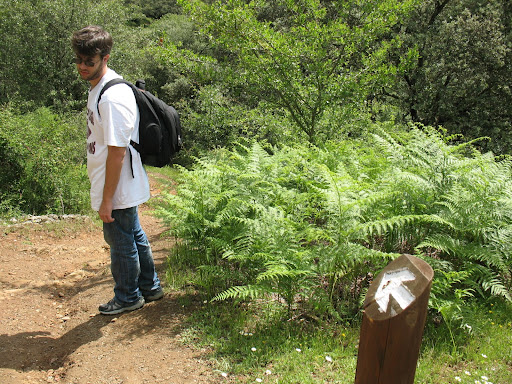
Anyway, the trail was gated off with this sign “Cerrar Cancela,” but Brian didn’t care about some crappy sign. So, we climbed over the fence and kept going.

Parque Natural Sierra Norte


The main reason we went to Cazalla de la Sierra was to take advantage of its location within the Parque Natural Sierra Norte and do some hiking.
From Cazalla de la Sierra, there are two tracks that lead down through the Huéznar Valley. If you combine the two, it is a roundtrip of 9km. Sendero de las Laderas started the trek for us at El Chorillo fountain on the eastern edge of town at the foot of Calle Parras.

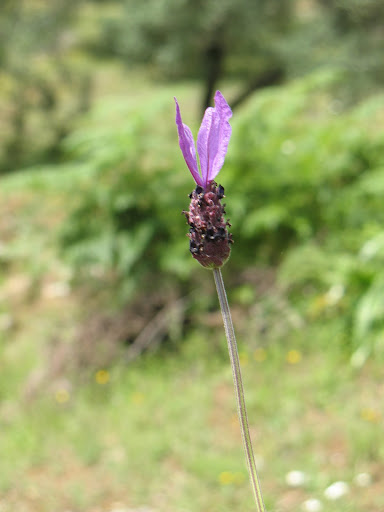
Along the way, the views were of typical Sierra Norte evergreen oak woodlands, olive groves, spring flowers, and small cultivated plots. As for the wildlife, you could see bulls and horses grazing on the hillside and cute dark cerdo ibérico pigs that eventually become that delicious Spanish jamón that everyone raves about.

Sunday, June 1, 2008

Anisados

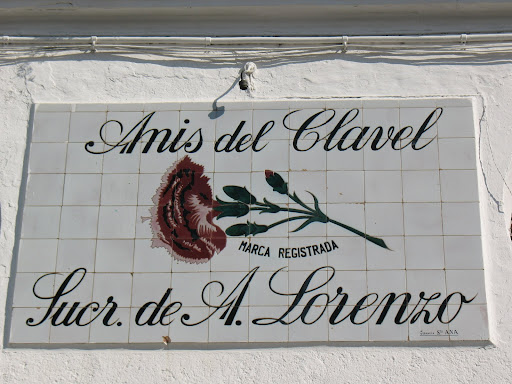
Cazalla de la Sierra has celebrated anisados (aniseed-based liqueurs); the guinda (wild cherry) is a heart warming beverage that we enjoyed during the winter to warm us up on cold days.

Iglesia de Nuestra Señora de la Consolación

Cazalla de la Sierra, like the rest of Spain, also had a small church: Iglesia de Nuestra Señora de la Consolación. Fortresslike in appearance, it is of 14th or 15th century constructions made of red brick and yellow Stone. Because of damage it suffered during the civil war, it is said that the church is actually more impressive outside than inside.

Cigüenas


Because Cazalla de la Sierra is tucked away in the Sierra Norte, there were a number of cigüenas (storks) with gigantic nests in the towers of many of the taller buildings and churches. My favorite was when we stumbled upon this sign, warning passersby of the possibility of falling stork “excrements.”

Cazalla de la Sierra

A couple of weekends ago we got up early and went to Cazalla de la Sierra, a small town located in the Parque Natural Sierra Norte.

Alameda de Hercules

We have enjoyed taking paseitos in Alameda since we arrived in Sevilla. The sunny days tend to bring out all kinds of people, and dog owners let their dogs run free in the plaza. Needless to say, it’s one of our absolute favorite spots in town for people watching…

Muralla


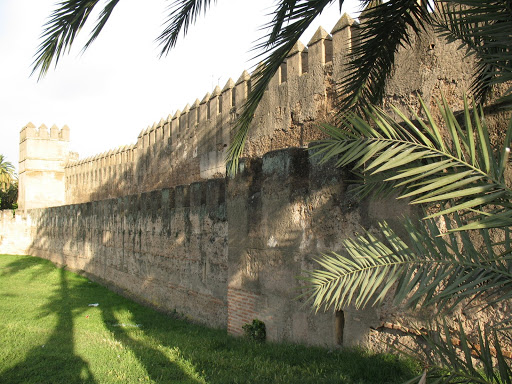
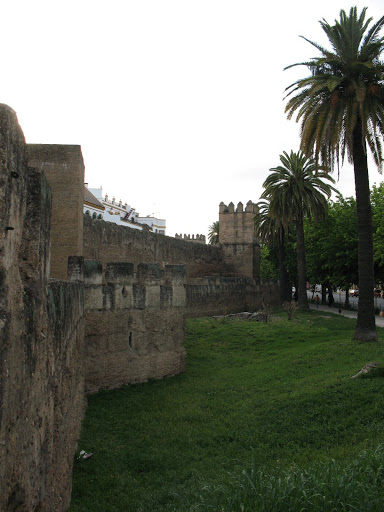
East of the Basílica de la Macarena is the longest surviving stretch of Sevilla's 12th century Almohad wall.

Basílica de la Macarena

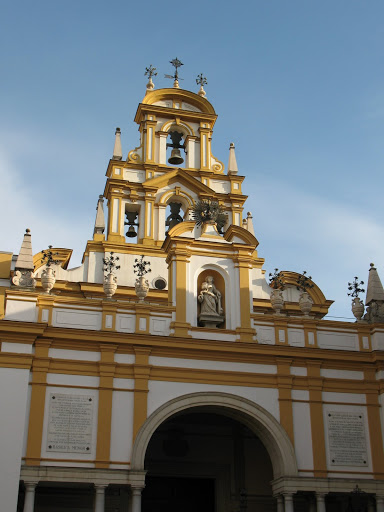
The 1940s Basílica de la Macarena is revered throughout Sevilla as the home of one of the city’s most honored virgins, the Virgen de la Esperanza Macarena (Macarena Virgin of Hope).

Cartuja 93


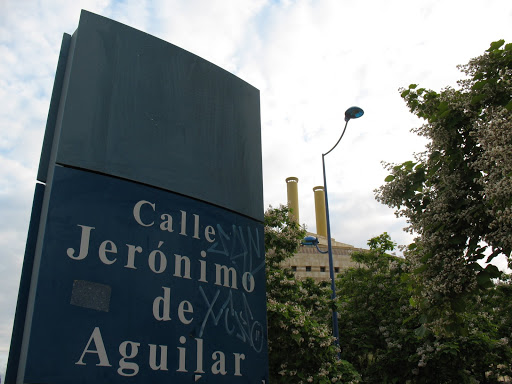
Home to the technology park of Sevilla, the nearly 200 companies and organizations of Cartuja 93 employ some 9000 people. Many of the exotic Expo pavilions are located within this park on the western side of Calle Américo Vespucio.

Huevo de Colón

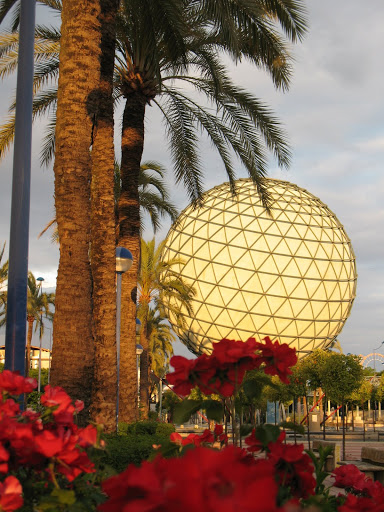
After we had been back in Sevilla for a few days and had gotten good and rested up, we decided to run the 5km out to the Huevo de Colón. In Spanish, it is translated as either the egg or ball of Columbus. Originally constructed as part of the 500 year commemoration of Columbus’s first voyage in 1492, it is a 30m tall monument that is well worth the hike to get there.

On the road again…


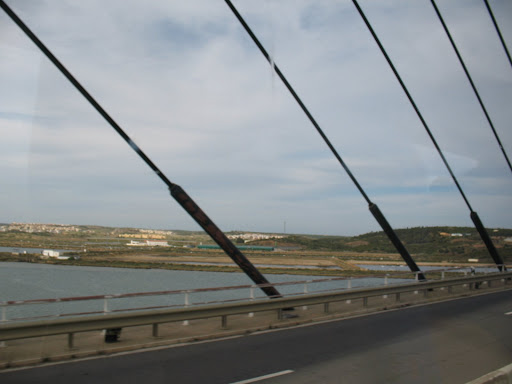
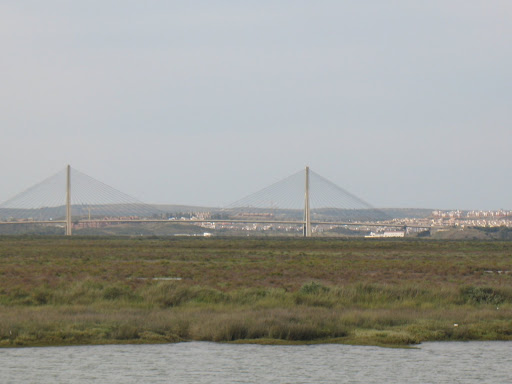
Once we got back on the road, it was not long until we came to this bridge, which meant that we were officially about to cross the Spanish-Portuguese border.