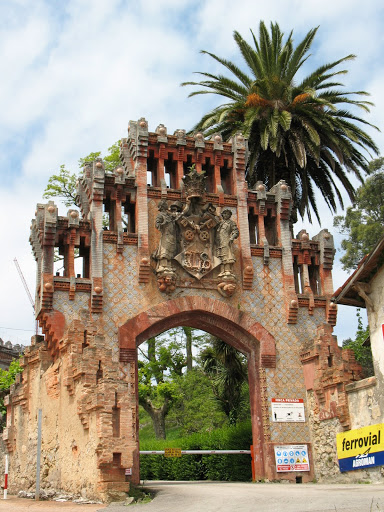
 After we got turned around and started back into town, we ran into the Universidad Pontífica in Comillas, which is no longer actually a pontifical university.
Saturday, July 5, 2008
Universidad Pontífica
After we got turned around and started back into town, we ran into the Universidad Pontífica in Comillas, which is no longer actually a pontifical university.


Sunday, June 22, 2008
Comillas Graffiti

Apart from the natural beauty of the area, Brian found graffiti to add to his collection for his graffiti blog:
sevigraffiti.blogspot.com
The pictures that he took that day are available in his photo gallery:
http://picasaweb.google.com/audio.transfer/Comillas
Parque Natural de Oyambre


 After we left the Palacio de Sobrellano, we got a little turned around and ended up walking towards the Parque Natural de Oyambre. Even though we were a bit lost, the breathtaking views out over the Cantabrian countryside were well worth the trouble.
Palacio de Sobrellano

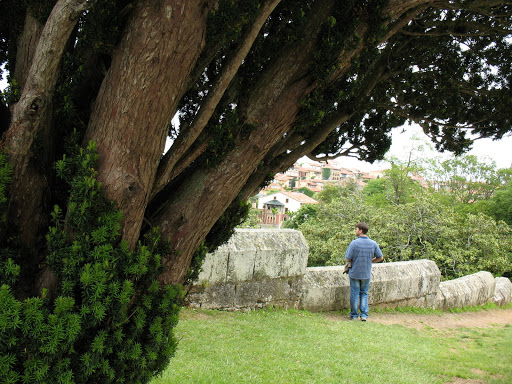


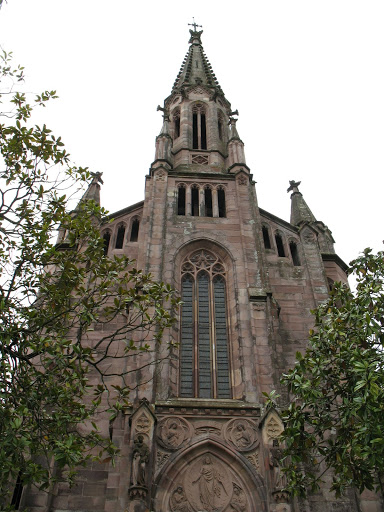
 Forming part of the same hillside parklands as the Capricho, the Palacio de Sobrellano is a neo-Gothic palace designed by Catalan architect Doménech I Montaner.
Rose garden
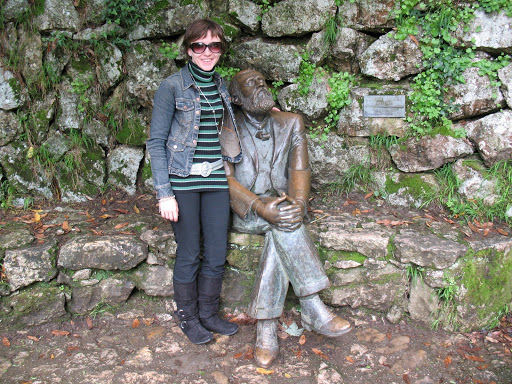
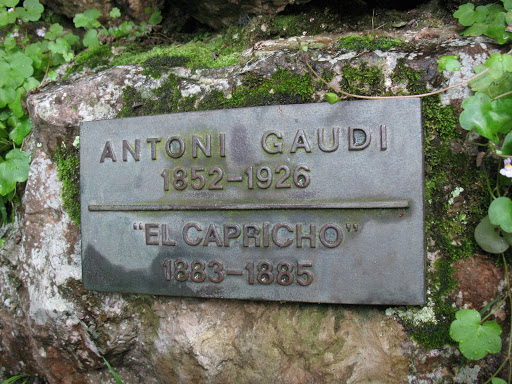


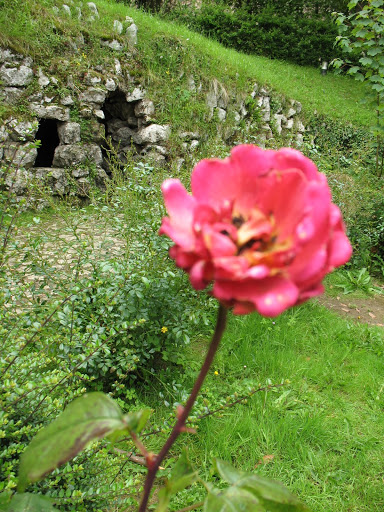
 Surrounding El Capricho was a rose garden to add to the overall ambience of the palace in addition to a statue of the Catalan architect himself.
Capricho de Gaudí


First on our agenda for the day was El Capricho. Antoni Gaudí left few reminders of his architectural genius outside Catalonia, but the 1885 Capricho de Gaudí (Gaudí’s Caprice) in Comillas is easily one of the more extravagant of those that he did leave behind.
This brick building was originally the summer house for the Marqués de Comillas, but the modest-stature building striped with ceramic bands of alternating sunflowers and green leaves opened its doors to the public offering a truly Modernista dining experience.
The Capricho was one of many building commissioned from leading Catalan Modernista architects for Comillas by the first Marqués de Comillas. The Marqués was originally born in the town as a commoner, “Antonio López,” but made a fortune in Cuba and returned to beautify his home town.
Comillas
 The next morning we took a bus to Comillas, a cobbled old sea-side village with verdant valleys and hills topped with some of the most original buildings in all of Cantabria.
Catedral del Cristo
 After we had settled into the hostal, we decided to take a walk to see the city at night. This is Santander’s gothic cathedral which dates to the 13th century, so the building is often referred to as the city’s first monument.
 Although we never actually ventured inside, interestingly enough, the cathedral houses the remains of the heads of martyred Roman soldiers Emeterio and Celedonio in its crypt. They are stored in two 16th-century silver reliquaries that were formed in the image of their faces. After facing the guillotine in AD 300 in La Rioja, their heads were transported to Santander for safekeeping during the Moorish invasion.
Friday, June 20, 2008
Hostal Cabo Mayor
 We were really fortunate that our hostal for the two nights that we spent in Santander was literally within 100 meters of the city’s main bus station (i.e. we didn’t have to lug our suitcases to Timbuktu). After we had checked in and settled in to our room, we were pleasantly surprised to find that there was a hidden kitchen, which included a mini-fridge, stove, sink, and dishes/utensils. This was definitely one of our favorite hostals that we have stayed in so far.
Bus through Cantabria
 As soon as we landed at the airport, we took a shuttle to Termibus, the main bus station in Bilbao; from there, we proceeded to buy tickets on the last bus to Santander for the evening. This was a quaint little house out in the country that we saw along way.
Corpus Christi

 One of the great things in Spain is that if a holiday falls on a Tuesday or a Thursday, we make a “puente,” or a bridge, so that the days in between the holiday and the weekend are also taken as time off. Being that I only taught on Tuesdays and Thursdays this semester, sometimes that meant that I would have Wednesday through Monday off.
 Such was the case for Corpus Christi. All in all, I had from the 21st until the 26th of May off, so Brian and I took advantage of Vueling’s direct flight to Bilbao, so we could see some of the Basque Country and neighboring Cantabria.
The first picture is our plane as they were loading the luggage in Sevilla. The latter is of our plane flying through the green countryside of the Basque Country as it was nearing the airport in Bilbao. It never ceases to amaze how much like night and day the north can be from the south!
Monday, June 2, 2008
Cruces de Mayo
 May in Sevilla means lots of little parties for the various neighborhoods across town to elaborately decorate a cross and prepare scrumptious food; this tradition is known as the Cruces de Mayo. One day as we were walking home along the river, we stumbled upon this one.
Fernando Botero: Una mirada diferente
 A couple days later we went to the Fernando Botero exhibit sponsored by Cajasol here in Sevilla. Botero is a Columbian artist whose oil-canvas protagonists are generally obese; his works are often thematically oriented towards social themes of violence and repression, both of which are all too common in his home country.

Ganado suelto
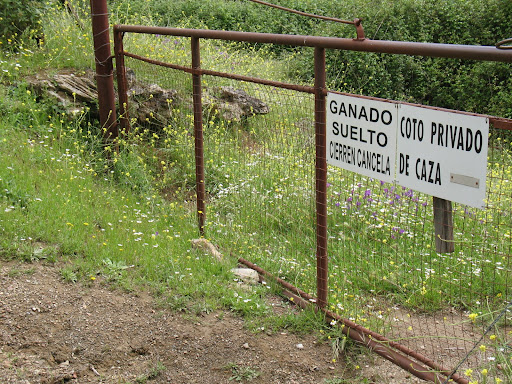
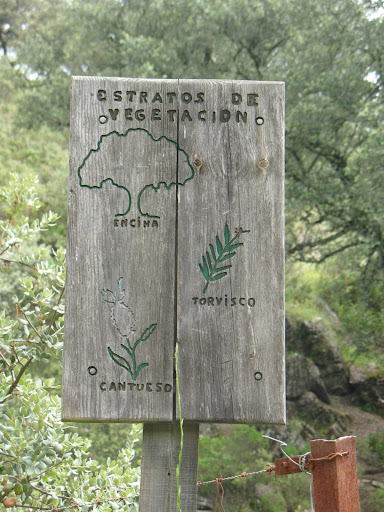
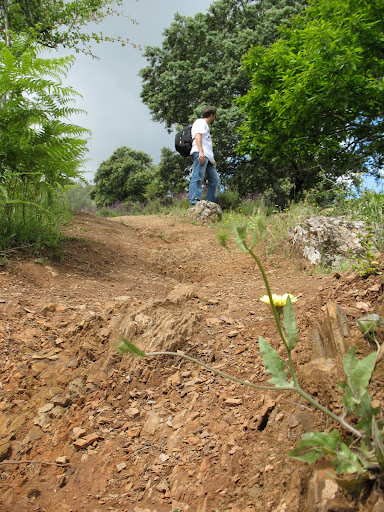

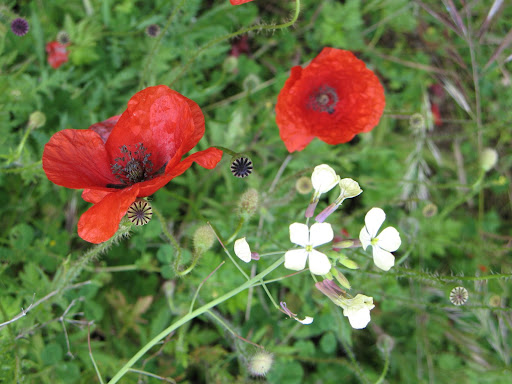

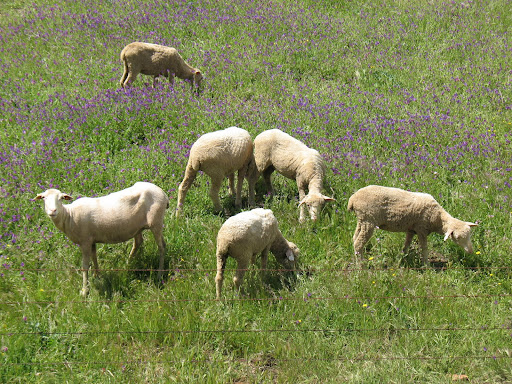
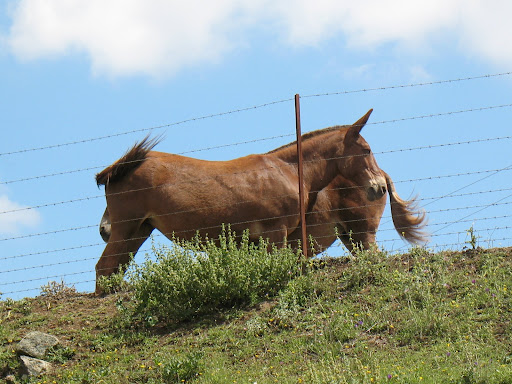
 Once we got to the bottom of this really steep bank, we realized just why they had closed the trail off before – there was “Ganado suelto” loose inside the gate, which meant that there were probably bulls running loose. Since we are no match for a toro, we turned back the way we came and climbed the steep incline of the inbankment.
Subscribe to:
Posts (Atom)
