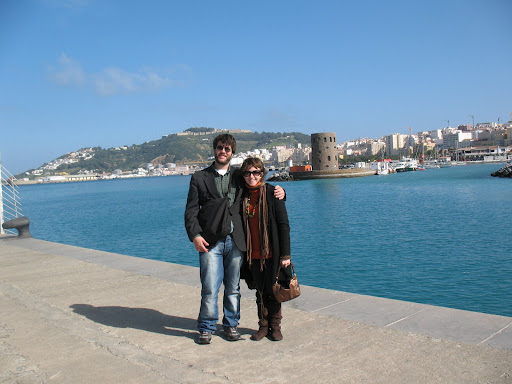
 This was the view of the city after we got off the ferry. Fortunately, the clouds moved off into the distance, and we were able to enjoy sunny skies for the day. What a perfect opportunity to pose for a picture with my guapo!
Monday, February 25, 2008
In Ceuta at last!
This was the view of the city after we got off the ferry. Fortunately, the clouds moved off into the distance, and we were able to enjoy sunny skies for the day. What a perfect opportunity to pose for a picture with my guapo!


Docking in Ceuta
 The European Union, Spanish, and Ceutan flags are the first to welcome you to Northern Africa.
The waters across the Strait of Gibraltar are particularly rough due to the strong currents from both the Atlantic and the Mediterranean. After fighting off seasickness for nearly an hour, I have never been so glad to see land in all of my life!
Saturday, February 23, 2008
Strait of Gibraltar

 Our first day in Algeciras we bought tickets for the ferry which connects the mainland of Spain to the African coast. After 45 minutes in transit via the Strait of Gibraltar, we arrived in the port of Ceuta, which, like Melilla, is an autonomous city owned by Spain that is located within Morroco.
Friday, February 22, 2008
Hostal Marrakech
 The first weekend that Madre and her buddies were here in town, we took a bus to Alegeciras. From there, we had a good starting point to travel to Gibraltar and Ceuta.
 Our hostal was called the Hostal Marrakech, which is run by a Morrocan family. This picture is an example of the tilework that is found inside.
Bus to Algeciras
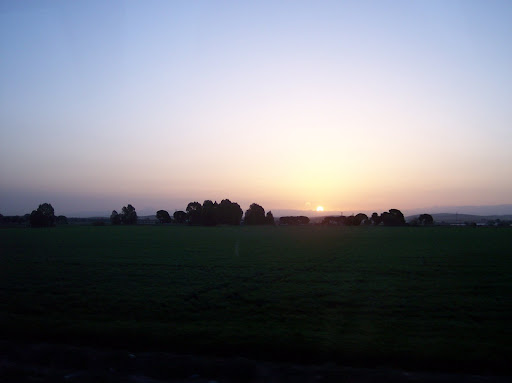
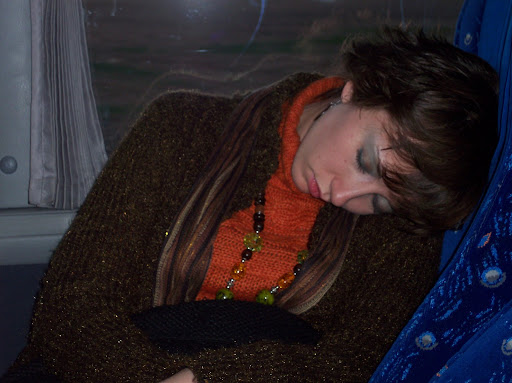 We had to catch the bus at 6:00 in the morning to go to Algeciras.
 Needless to say, not all of us made it to see the sunrise…
Brown Sugar Bar
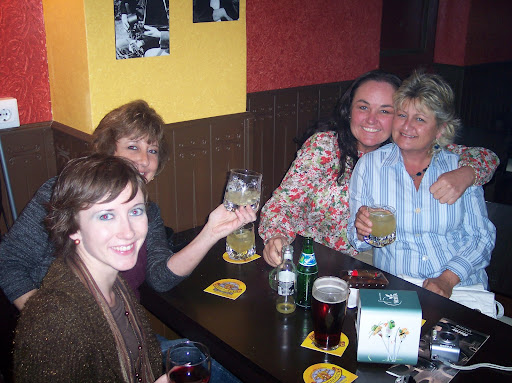
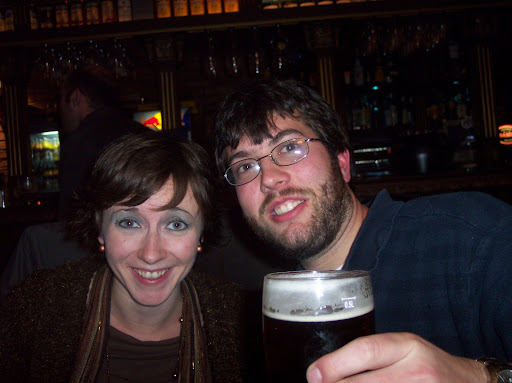 One of their first nights here, I met Brian, Madre, Janet, and Eddie at a bar right in front of the University called the Brown Sugar Bar.
 Everyone had a good time, especially once the bartender started playing Lynyrd Skynyrd…
Grooming the Orange Trees
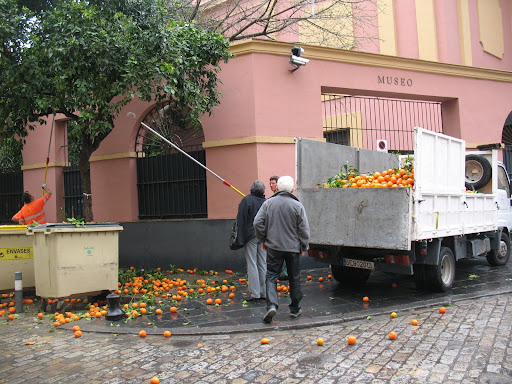 One day while we were all walking in front of the Museo de Bellas Artes, we noticed that they were cutting all of the oranges from the orange trees.
I suppose that is to make sure they don’t fall and hit you square on the head!
Madre & Co.
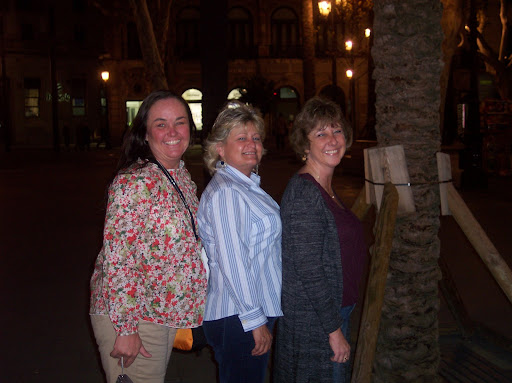 Once the exams were over, Madre came to visit us with two of her friends from North Carolina, Janet and Eddie. It was so good to see everyone after so long.
Polytechnic School at the University of Seville
 After we got back from Amsterdam, it was back to the real world and to the Polytechnic School with me to finish up the semester, as it was just about time to give the final exam.
 This is a picture of my office at the school, which is located on Calle Niebla in Los Remedios here in Seville.
Home Sweet Home
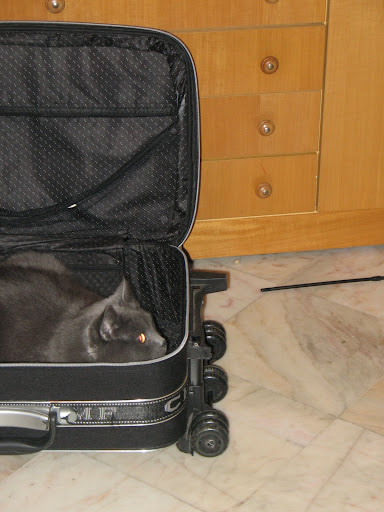 Smokey, of course, was happy for us to unpack! He always loves playing in empty suitcases.
Thursday, February 21, 2008
Back to Sevilla!
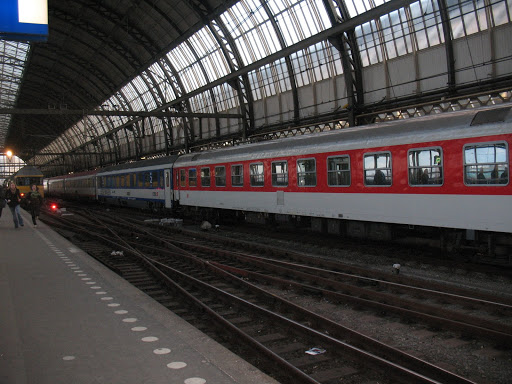 After spending a few days in Amsterdam, it was time to go to Centraal Station to catch the train to the airport and head back to Sevilla. We’re coming, Smokey!
Wednesday, February 20, 2008
Nationaal Monument
 Across the street from the large Dam Square where the Koninklijk Paleis stands is the Dutch Nationaal Monument. Unveiled on May 4, 1956, it honors Dutch victims of WWII. Interestingly enough, there is soil from each of Holland’s 12 provinces as well as the Dutch East Indies inside the 21m white-stone obelisk.
Koninklijk Paleis
 The Koninklijk Paleis, or the "Royal Palace" in English, was completed in 1655 and served as the town hall until Louis Napoleon had it renovated in 1808 to look the part of a royal residence. Today, Queen Beatrix still holds official receptions there despite the fact that she lives in The Hague.
Sint Nicolaaskerk
 The church across the canal in this photo is the Sink Nicolaaskerk. Erected in 1887 by A.C. Bleys to honor the patron saint of sailors, it replaced many secret Catholic churches formed after the Calvinists took power and ordered the Catholic icons to be abolished in the 1570s.
The architecture is designed in a neo-Renaissance style with black marble columns, a domed ceiling, and wooden vaults. Although it is impossible to see in this picture, the bursts of color of the stained-glass work in the church is very impressive.
Waag
 The next morning, while we were wandering around just before heading home, we stopped by the Waag to take a few pictures. It is located in Nieuwmarkt, which is the square on the border between the Oude Zijde and the Jodenbuurt. The Waag is Amsterdam's largest surviving medieval building dating from the 15th century and was one of the city's fortified gates which later housed the Surgeons Guild's amphitheater. Public dissections and private anatomy lessons once took place there, as indicated by Rembrandt's The Anatomy Lesson of Dr. Tulp.
Subscribe to:
Posts (Atom)
