Saturday, January 26, 2008

Petardos


Noche Vieja is often accompanied by an abundance of sparklers and firecrackers, or “petardos” in Spanish, to celebrate the coming of the new year!

In the top picture, Brian and Mari Carmen's little brother, Luis, are showing off their skills. In the bottom one, Mari Carmen’s dad, older brother Quini, and Luis are getting the next round of petardos ready to take to the streets.

Friday, January 25, 2008

Dinner on Noche Vieja


Noche Vieja, or New Year's Eve, is a holiday that usually entails a large dinner with the family; celebrating the holiday with Mari Carmen was certainly no exception. She and her mother spent days preparing all of the food that was part of the spread we ate that night.

Normally, Spanish flags don't figure into the arrangement, but they decided to use them to designate that this was an international gathering. I can still hear, "¡Americanos… os recibimos con alegría!” Thank you Quini!


La comida de Melilla


Of course, one of the best parts of Melilla was all of the home cooked meals that Mari Carmen's mom made. She is an excellent chef, and I swear that Brian and I both gained a few pounds while we were there!

One of our first meals was paella, a typical rice dish that contains shellfish, chicken, red peppers, peas, and saffron. It was by far the best we have had since we have been in Spain.

We also got to try Mari Carmen's mom's recipe for croquetas made from scratch. They were so good that Brian hasn't been able to look at the ones here in Seville quite the same!

Another typical dish from Melilla is the Moroccan kabobs, or "pinchos morunos." They are seasoned with Moroccan spices and cooked on the grill. I quickly learned that there is a certain way that you are supposed to slide the meat off of the skewer the first day that we were there. We were in a restaurant, and I ordered one. Completely oblivious to the way in which the natives gracefully removed the meat, I bit into mine and began what resembled a game of tug of war, maneuvering the meat as best I could. Of course, I stuck out like a sore thumb, causing Mari Carmen and her family to erupt into laughter.

Wednesday, January 23, 2008

Belén de Melilla

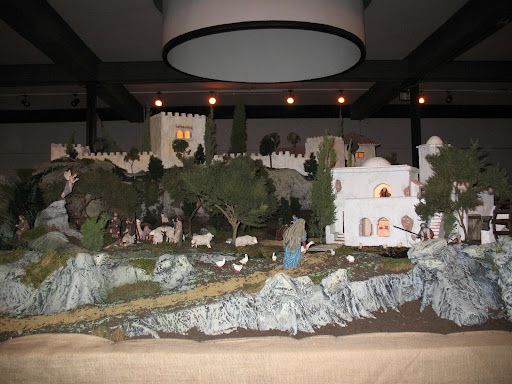
After spending weeks touring all of the different renditions of Bethlehem in Seville, we went to see Melilla’s version with Mari Carmen and her family. My favorite part of the belén in Melilla was that they incorporated the Arab spice market, one of the many signs of the Islamic influence in the city.

Tuesday, January 22, 2008

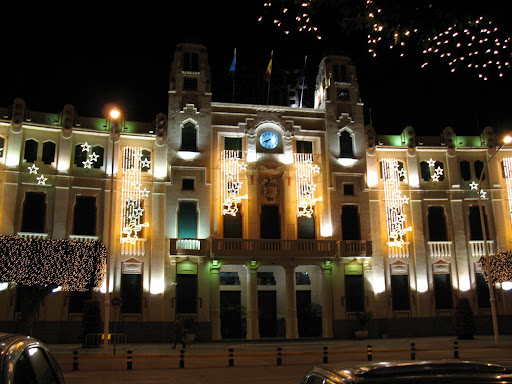
Luces navideñas en Melilla


Since Christmas lasts until January 6th, Melilla was no exception to the holiday decor found throughout Spain. Being that I adore Christmas, I was excited to have the opportunity to see a new array of Christmas lights and holiday trimmings.

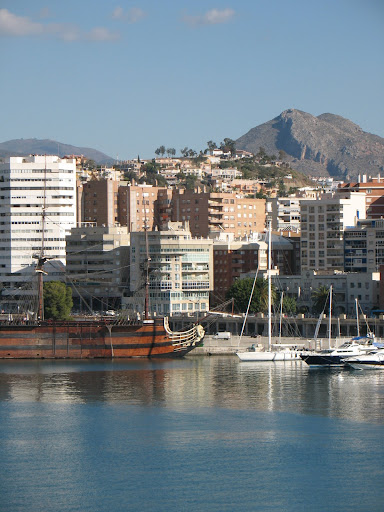
Melilla


Melilla is one of the two autonomous cities owned by Spain that are located on the northern coast of Africa. It is technically situated inside of Morocco, but is separated from Moroccan territory by a large fence which runs along the entirety of the city’s border. To get an idea of where Melilla is located with respect to the rest of Europe, the following link has a good map:

http://www.melillaturismo.com/plano_europa.htm

Despite the physical boundary separating the Spanish enclave from the rest of Africa, there is a beautiful mix of Christians, Muslims, Jews, and a small number of Hindus. It is really interesting to see how Melilla’s inhabitants coexist, which results in an interesting cultural exchange.

Brian and I went there to visit a dear friend of mine, Mari Carmen, and her family most graciously opened their doors to share their beautiful city with us. It was an incredible experience that we will most certainly never forget.

Monday, January 21, 2008

Out to sea...


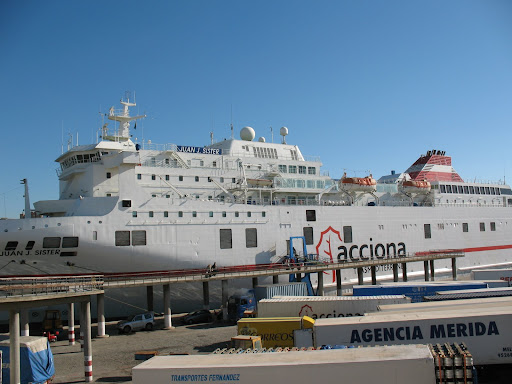
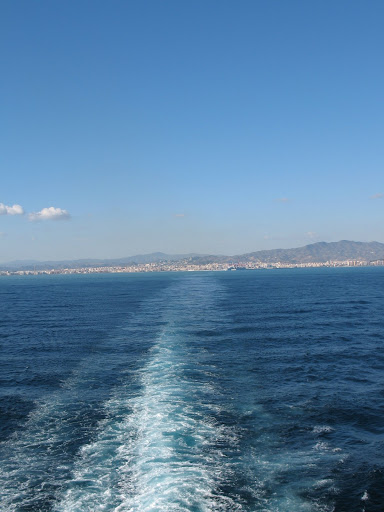
We took an eight-hour ferry ride from Málaga to Melilla. We left around 2 p.m. and arrived in Melilla later that evening. It was a beautiful day to be at sea!

Málaga


In order to take the ferry across the Mediterranean to Melilla, we had to first go to Málaga. We got there early in the morning by bus and then made our way to the city's port.

Archivo de Indias


Just before heading off to Melilla for the New Year, Brian and I stopped by the local Archivo de Indias (Archives of the Indies) to see an exposition that they had featuring the collection of Mexican objects that once belonged to Duke of Montpensier.

Villancicos


Because Christmas is such a big holiday here in Spain, you can imagine how important the Christmas carols are....

One day, Brian and I were walking in the center of the city when we just happened to stumble upon a group of people taking advantage of the prime location to strike up the chorus. Not only did we take advantage of the many performances around Seville, but it has been nice to sing many a tune with our friends. In this picture, Vicente is playing the guitar, and Manolo and Rafa are chiming in along with the rest of us. Of course, I had to multi-task to make sure and take a picture!

Navidad en Mairena


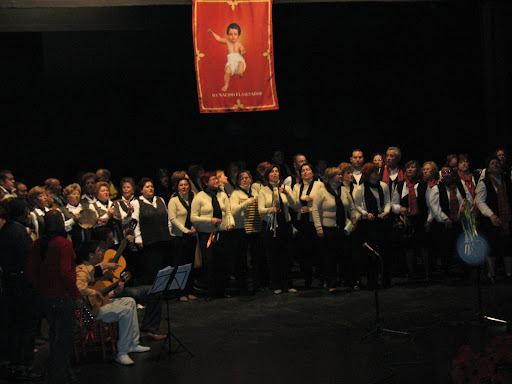
A friend of ours here in Seville, Constanza, invited us to a Christmas concert in Mairena, a small town just outside of the city. There were lots of Christmas carols in addition to the traditional belén.

Thursday, January 3, 2008

Wise Kings vs. Santa Clause


In Spain, Santa Clause doesn't bring presents on the night of the 24th like in the States, but rather the children must wait until the night before the wise kings safely returned home from their journey to see baby Jesus. They officially made it back to their hometowns on January 6th, so when the children wake up on that day they are surprised with lots of goodies that the wise kings left them.

Even though traditionally Spain celebrates the arrival of the wise kings, setting up various renditions of the city of Bethlehem to symbolize the holiday, the cultural influence of Santa Clause and the Christmas tree is penetrating more and more into the Spanish Christmas. This has caused a bit of a controversy. Those that are more conventional maintain the traditional Bethlehem whereas younger generations are incorporating more images of Santa Clause and the Christmas tree.

The top picture depicts the typical decoration of the wise kings climbing the terrace to someone's house to drop off the presents. The image below shows the terrace of one of our neighbors with a Santa Clause in place of where the wise kings once were.

Baltazar


In Spain, Santa Clause doesn't bring presents on the night of the 24th like in the States, but rather the children must wait until the night before the wise kings safely returned home from the journey. They officially made it back to their hometowns on January 6th, so when the children wake up on that day they are surprised with lots of goodies that the wise kings left them.

Instead of the children sitting on Santa Clause's lap in the shopping malls, they tell one of the wise kings (Baltazar) what they want.

Feria de Artesanía


Every year in Plaza Nueva, there is a fair for local artisans to sell their goods which lasts from the middle of December until January 5th. That gives anyone interested enough time to buy any last minute gifts before the Día de los reyes (Day of the Wise Kings).
If you look to the right of the photo, there is a man roasting chestnuts. Before coming here to Spain, this was something that only existed for me in Christmas carols. Chestnuts roasting on an open fire...

Navidad


To celebrate Christmas Day, we went to Jonathan and Eric's house and prepared a wonderful feast fit for the kings, the three wise kings to be specific. We had partridges (perdices in Spanish), ribs with homemade BBQ sauce (since that sort of thing can't be found in stores here), mashed potatoes, green beans with ham, apple tart, and pumpkin pie (thanks to Madre). We stuffed ourselves and then proceeded to sing a few carols, with the accompaniment of Jonathan's guitar. Those of us that don't have a clue as to how to play the guitar opted for other instruments--cookie tins, beer bottles, etc. Although we missed seeing everyone in North Carolina, we are so fortunate to have had such good friends here in Spain with whom to spend the holidays.